Longevity escape velocity is when we become able to extend life expectancy at a faster rate than we age. It is likely people alive today will live to see it. By radical, I mean indefinite. The end of aging.
Economic Freedom
Decentralized finance and post-scarcity models enabled by automation and AI, altering how we produce value.
Energy Abundance
Unlocking near-infinite clean energy through fusion and advanced storage, powering a post-scarcity world.
Bioengineering
Rewriting life's code using tools like CRISPR to cure inherited diseases and enhance human capabilities.
Nanotechnology
Manipulating matter at molecular scales to construct perfect materials and medical nanobots.
Transhumanism
Integrating cybernetic implants and advanced neural interfaces directly into the human body.
Space Colonisation
Establishing permanent human settlements beyond Earth to ensure long-term survival.
Decoding Reality
Probing the nature of existence and the fundamental laws of our universe. Why do we exist?
Existential Threats
Identifying risks that could lead to extinction, technology destruction, and dystopian futures.
Ultimate Truth
The final destination. The direction of travel of intelligence. This is our guiding light.
The Intelligence Inflection Point
// 4 Core Pillars
The AI Race
Pillar 01
This is everything now. The first pillar in what will be the birth of an intelligence greater than our own. The winner here could take complete global hegemony.
The AI War
Pillar 02
The stakes are higher than any stakes have ever been. If anything is going to spark WW3, it's the race for AI supremacy. Avoidable, but very possible.
ASI
Pillar 03
Artificial Superintelligence. AI dramatically surpasses human cognition across all domains. This is the point that we will think of the machines as conscious. The gateway to the Singularity.
The Singularity
Pillar 04
Our only foreseeable endgame. This is the point when ASI becomes so powerful it creates change at such a pace that everything becomes possible almost immediately. The event horizon impossible to predict beyond.
Get Newsletter Updates.
PossibilityGrid
Radical Life Extension
Longevity escape velocity is when we become able to extend life expectancy at a faster rate than we age. It is likely people alive today will live to see it. By radical, I mean indefinite. The end of aging.
Economic Freedom
Decentralized finance and post-scarcity models enabled by automation and AI, altering how we produce value.
Energy Abundance
Unlocking near-infinite clean energy through fusion and advanced storage, powering a post-scarcity world.
Bioengineering
Rewriting life's code using tools like CRISPR to cure inherited diseases and enhance human capabilities.
Nanotechnology
Manipulating matter at molecular scales to construct perfect materials and medical nanobots.
Transhumanism
Integrating cybernetic implants and advanced neural interfaces directly into the human body.
Space Colonisation
Establishing permanent human settlements beyond Earth to ensure long-term survival.
Decoding Reality
Probing the nature of existence and the fundamental laws of our universe. Why do we exist?
Existential Threats
Identifying risks that could lead to extinction, technology destruction, and dystopian futures.
Ultimate Truth
The final destination. The direction of travel of intelligence. This is our guiding light.
The Intelligence Inflection Point
// 4 Core Pillars
The AI Race
Pillar 01
This is everything now. The first pillar in what will be the birth of an intelligence greater than our own. The winner here could take complete global hegemony.
The AI War
Pillar 02
The stakes are higher than any stakes have ever been. If anything is going to spark WW3, it's the race for AI supremacy. Avoidable, but very possible.
ASI
Pillar 03
Artificial Superintelligence. AI dramatically surpasses human cognition across all domains. This is the point that we will think of the machines as conscious. The gateway to the Singularity.
The Singularity
Pillar 04
Our only foreseeable endgame. This is the point when ASI becomes so powerful it creates change at such a pace that everything becomes possible almost immediately. The event horizon impossible to predict beyond.
Get Newsletter Updates.
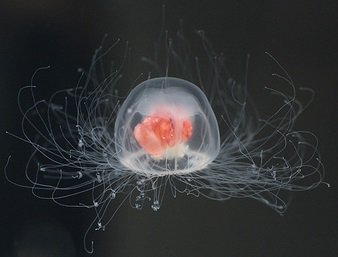
The ‘Immortal Jellyfish’ does not have the immortality you would want
Recently, the Immortal Jellyfish has been sprung into the limelight thanks to an article from the New York Times. This article shines light on mysteries which were not alluded to by the New York Times.
We know for certain two things, we live and then we die? In 1988, man discovered otherwise upon its discovery of the Immortal Jellyfish (Turritopsis Nutricula). Recently, the Immortal Jellyfish has been sprung into the limelight again by an article from the New York Times, in which they ask the question, Can a Jellyfish unlock the secret of immortality?
So what is it that makes the Turritopsis Nutricula immortal? And can it really show us the secret to our own immortality? Unfortunately, the New York Times does not go far in explaining this, for reason of that explanation not actually existing.
Cellular Rejuvenation is Possible
As is detailed in our website, there are many potential methods by which we can become immortal. The story of the Immortal Jellyfish potentially examples one of those methods – cellular rejuvenation. It is explained in the New York Times article that when the Immortal Jellyfish suffers environmental stress or a physical assault, a process of rejuvenation is initiated and it begins to ‘grow younger’. This though is where the excitement ends. Countless news articles have been written suggesting that this rejuvenation allows the jellyfish to live forever, and that through study we could unlock the secret to human immortality.
What is important to note is that the rejuvenation process seen in the Immortal Jellyfish involves its cells undergoing cellular transdifferentiation, where for example, its skin cells can transform into nerve cells. The Immortal Jellyfish continues to rejuvenate until it reaches its earliest form of life as a polyp, from where it once again begins to age as any other biological organism, once its environment can supports its life.
Not the immortality we would desire
So, immortality, rejuvenation, ‘growing younger’, is possible. In the endeavour to apply this ability to ourselves though, as of yet, very little progress has been made, none of which has been made thanks to the Immortal Jellyfish.
A problem with the process seen in the Turritopsis Nutricula is that the rejuvenation process doesn’t stop, it continues until the jellyfish is at its earliest form of life as a polyp. The immortality that we would desire is one that involves the age of our cells being paused, so we neither grow older or younger.
Worse yet, the cells of the Turritopsis Nutricula do not only grow younger but also transdifferentiate, becoming something that they were not previously. The concern here is the retention of the human memories and consciousness during rejuvenation; our memories would be wiped during the process.
While the Turritopsis Nutricula is rejuvenating, it is losing its form while on the journey to the door from which it entered the world, the door which leads to inexistence, death. Once its cells are completely rejuvenated and it is on the brink of death, it once again grows as a reset organism. Everything that it becomes upon growing is continually reset. This is not an immortality that anybody would desire.
Another point is the possibility that it is not actually ‘growing younger’, but is instead simply transforming into a polyp via the most efficient route, which would explain the bastardisation of its cells.
Also, if it resets its biology, how does it evolve? How does it learn to better survive in its environment? Perhaps it is now incapable of evolution and is only immortal because of a genetic fault; instead of acting to repair the damage of an injury, it instead triggers the release of chemicals which happen to reset its biology – not the desirable reaction to most injuries. This would explain why it has only been found to have spread around the world since it was first discovered in 1988; the genetic fault may have only occurred soon before it was discovered, and its populace is now aided by the parent Jellyfish not dying naturally.
Very little is left then that is desirable to acquire from the biology of the Turritophis Nutriculais. Scientists have already previously discovered how to reprogramme adult cells and guide them into once again becoming stem cells through the manual induction chemicals, without the help of the Turritophis Nutriculais.
Find more information about human immortality on our Immortality introduction page.
I am the founder and sole author on That's Really Possible. From a UK intelligence background, I focus on exploring tech risks and opportunities.
I made That's Really Possible in 2011 during my time at university. I was exploring the potential of technology, and I needed an outlet to structure my thoughts. There was a 10-year hiatus while I focused on my career in the intelligence industry. Now we are entering the "knee of the curve" for all of what I foresaw in 2011, I've decided to go all in, as my mind is on absolute fire thinking about the possibilities of the world we are moving into.
Human purpose is at the very forefront of my mind. I spent 3 years fully dedicated to writing what became a 220K word book series where I explore how we can ensure we not only maintain our sense of purpose, but how we can become as full of life as very possible. You can explore more about that on my website, alivelaunchpad.com